shenghevietnam@163.com / +84338686128, +84374109382
Land Lot No. 716, Map Sheet No. 107, Dat Cuoc 12 Street, HCM City, Vietnam
Electronics and industrial products require packaging that can protect sensitive components throughout storage, handling, and transportation. Impacts, vibration, surface abrasion, and product movement inside the shipping box may lead to damage, returns, or additional replacement costs.
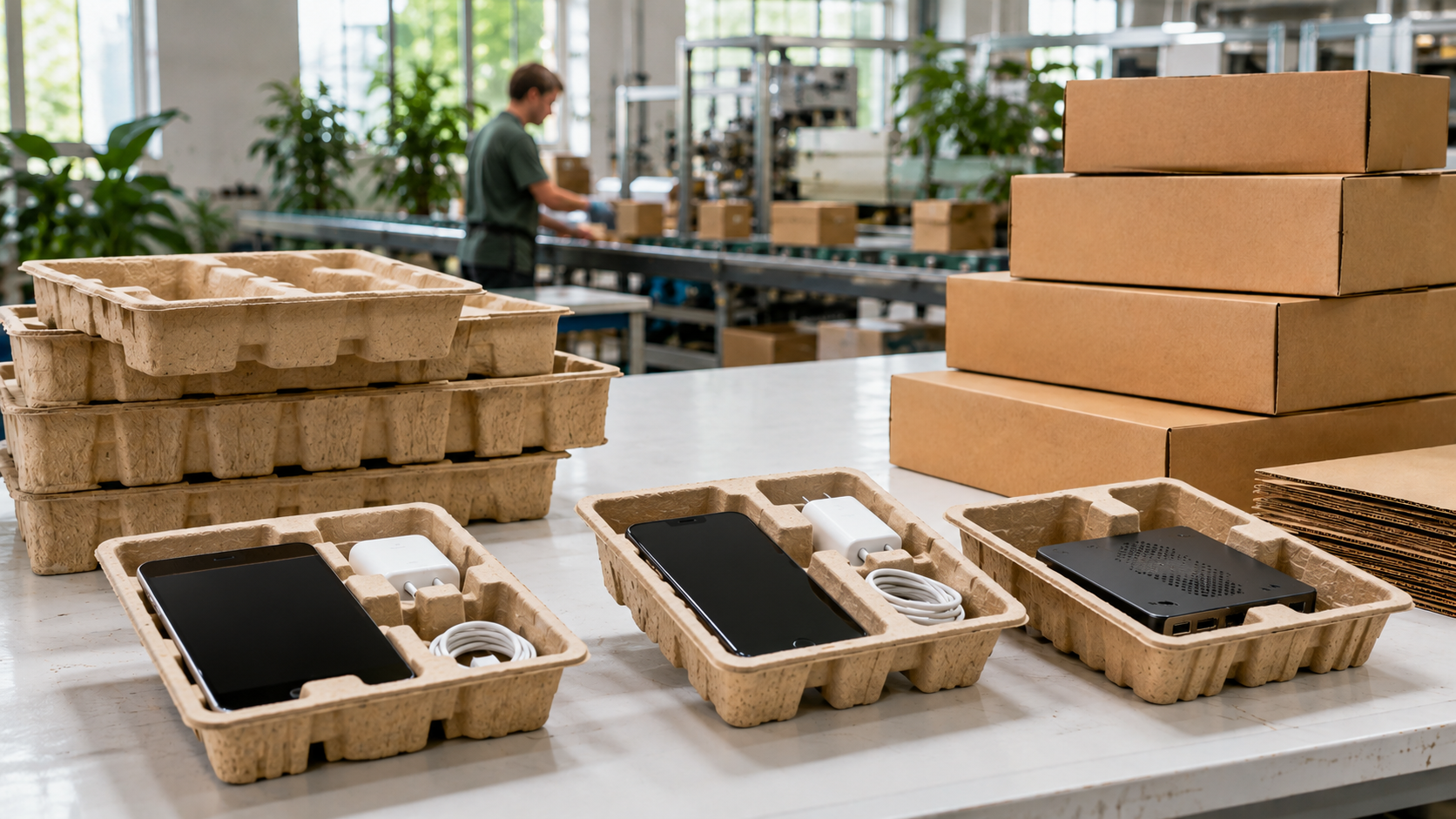
Molded pulp packaging offers a practical solution by holding products securely in place and cushioning them against external forces. Manufactured from fiber-based materials and formed to match specific product dimensions, molded pulp trays can be used for electronic devices, components, mechanical parts, tools, and various industrial products.
Molded pulp packaging is protective packaging made by forming a fiber-based pulp mixture into a designed shape. After molding, the product is dried and may undergo additional pressing or finishing processes to achieve the required surface quality, strength, and dimensional accuracy.
Common molded pulp packaging products include:
Unlike loose protective materials, molded pulp packaging can be designed around the dimensions and structure of a specific product. This helps keep the item stable inside the outer carton and reduces unnecessary movement during transportation.
Electronic products may contain delicate components that can be affected by impact, vibration, pressure, dust, or surface contact. Even when the outer carton remains intact, insufficient internal protection can allow the product to move and collide with other components.
Suitable protective packaging helps:
The required packaging structure depends on the product's weight, dimensions, shape, fragility, and transportation conditions. A small electronic accessory does not require the same protection as a large control unit or industrial electrical component.
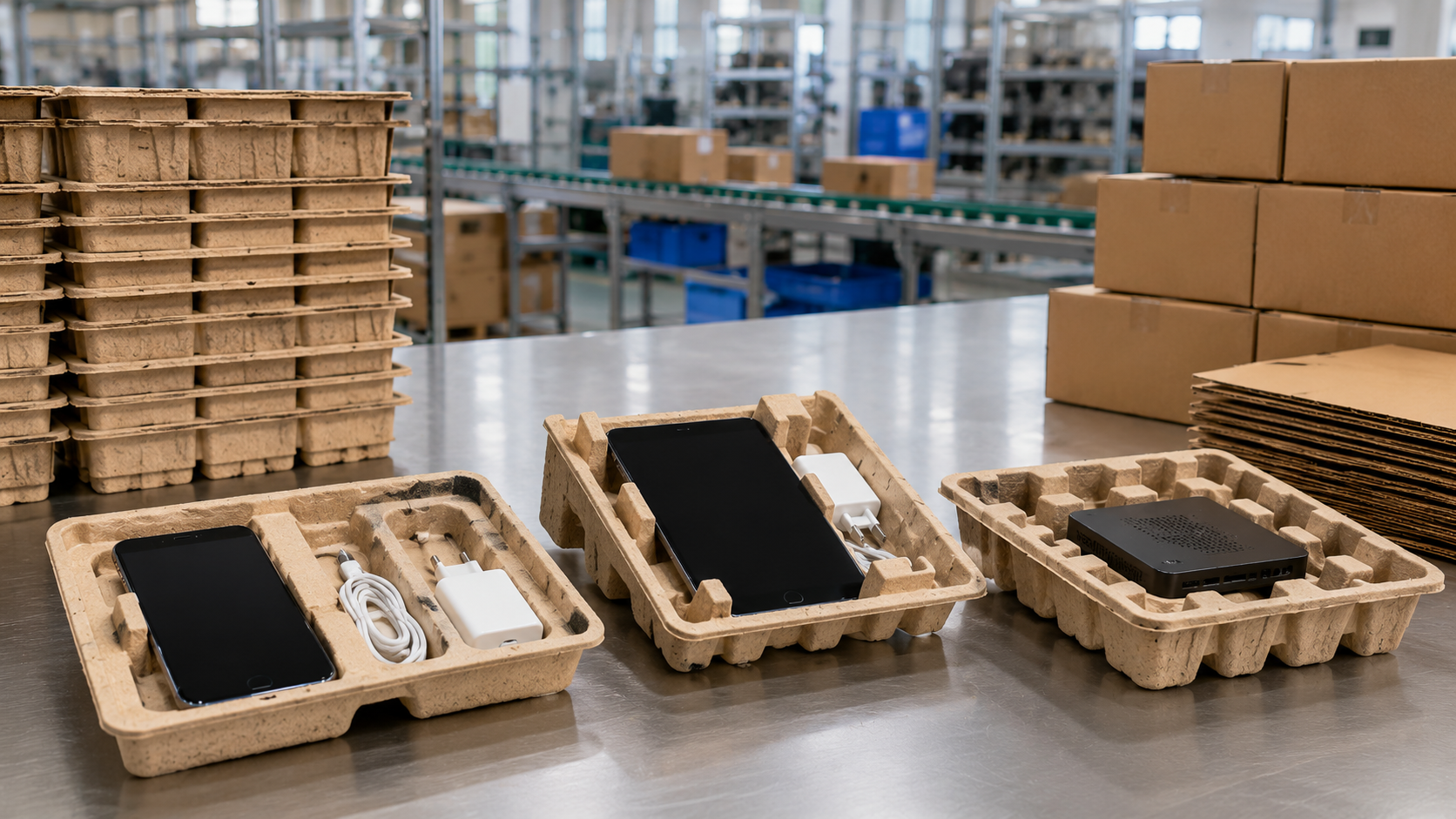
Molded pulp trays can be designed for electronic devices and related accessories. Custom cavities hold each item in a designated position, helping create an organized presentation while supporting product protection.
Potential applications include packaging for:
Electrical components often need to be separated to prevent contact, movement, or surface damage. Molded pulp s can include individual compartments for components of different sizes.
They may be used for:
Bulbs, fixtures, and other lighting products may contain fragile or easily scratched surfaces. Molded pulp packaging can support the product at ed points while limiting direct contact with the outer carton.
A packaging tray can hold the main product together with cables, manuals, adapters, and other accessories. This arrangement helps prevent missing components and makes the packing process more consistent.
Molded pulp packaging is not limited to lightweight consumer goods. Its structure can also be developed for various industrial products, depending on the required load-bearing capacity and protective performance.
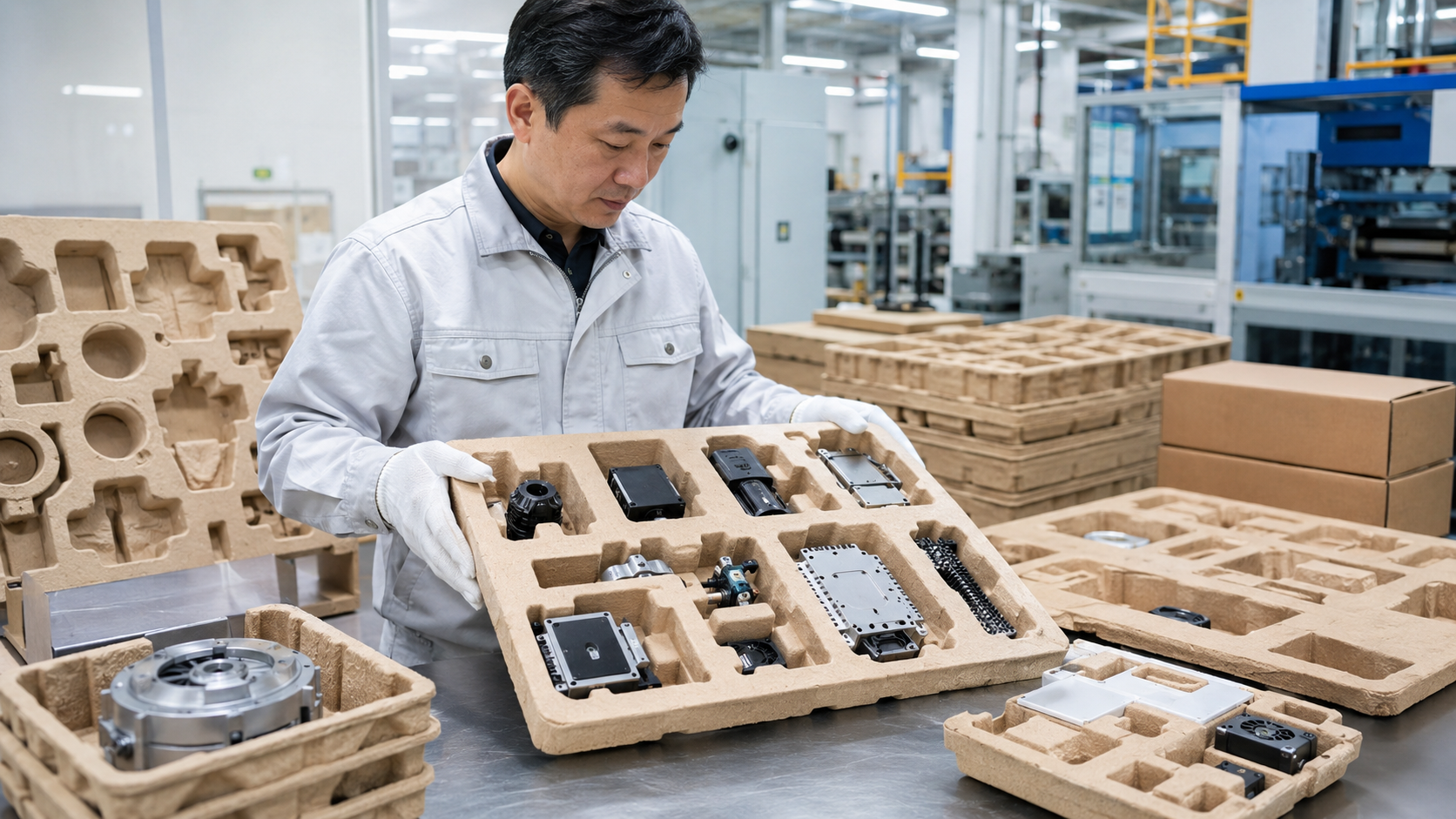
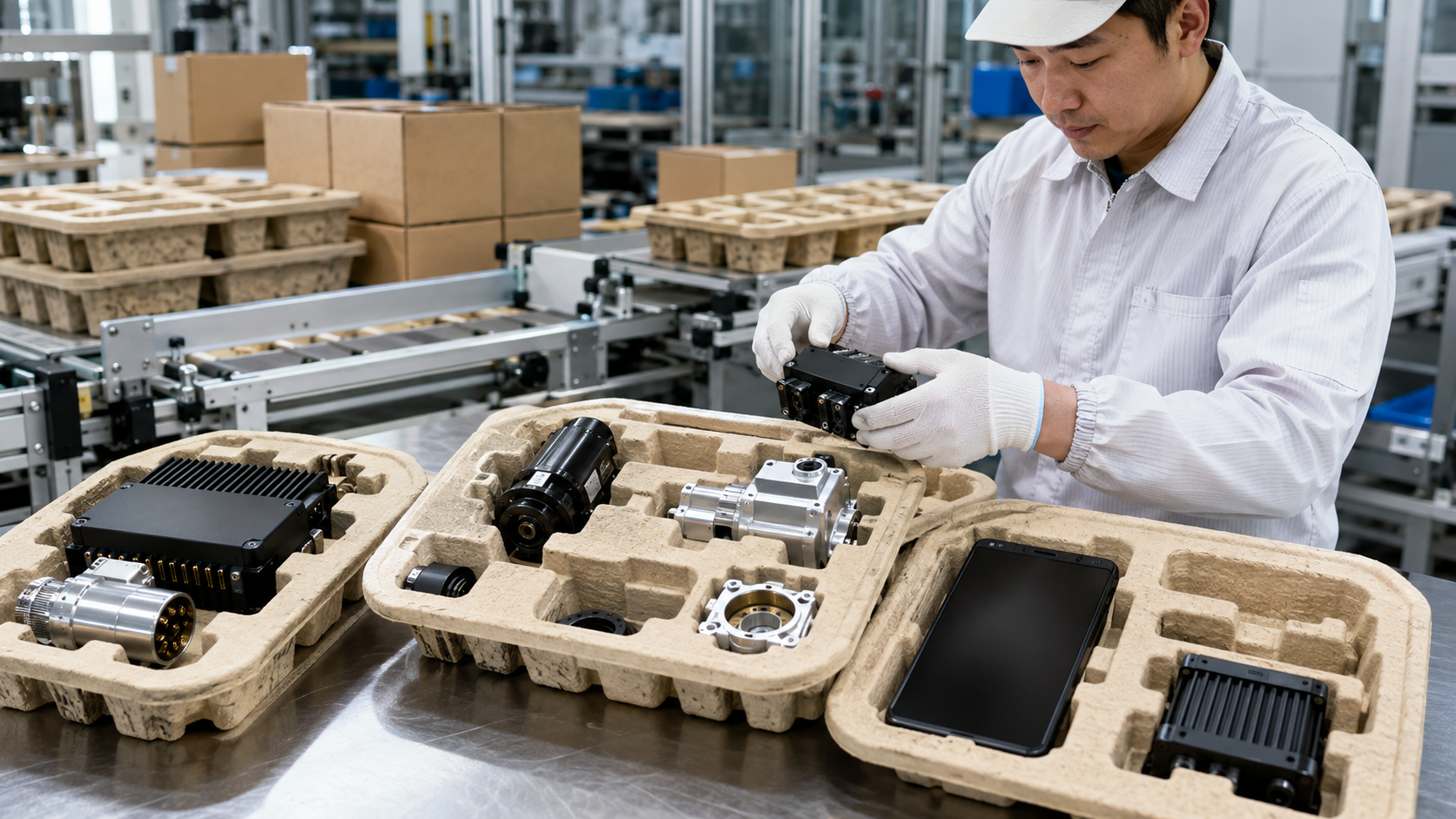
Metal and mechanical components can move inside a box if they are not properly secured. Customized molded pulp trays help separate parts and reduce contact between individual items.
Applications may include:
Tools and hardware products are often sold or transported as sets. Molded pulp s can organize each item within the package, allowing workers or customers to identify and remove components more easily.
Selected automotive parts and accessories may be packed in molded pulp trays for separation and protection. The packaging design should account for component weight, surface finish, and possible contact points.
Industrial sensors, control modules, meters, relays, and similar equipment require stable positioning during transport. Molded pulp s can be designed with supporting ribs, cavities, and locking structures suited to the product shape.
Maintenance kits often contain multiple small parts. A compartment-based tray helps arrange the components, improve order accuracy, and simplify inventory checks.
Custom molded pulp packaging can follow the contours of a product rather than relying on a standard rectangular . This allows the design to support critical areas and restrict movement inside the carton.
Features such as ribs, cushioning zones, raised edges, and separate cavities can be added according to the product structure.
Electronics and industrial products may be supplied with multiple components. A well-designed tray gives each item a fixed position, making it easier to verify the contents before sealing the package.
Organized packaging can also improve the unpacking experience and help customers understand how individual components relate to the main product.
Custom trays can be developed to fit both the product and the outer carton. This helps reduce unused space and may allow businesses to optimize carton dimensions, storage arrangements, and transport loads.
The final packaging size should still provide sufficient cushioning and protection. Reducing material or space should not compromise product safety.
With consistent dimensions and defined product cavities, molded pulp trays can support standardized packing operations. Depending on the production line, they may be used in manual, semi-automatic, or automated packaging processes.
Dimensional consistency is particularly important when trays must interact with conveyors, robotic systems, or fixed carton sizes.
Molded pulp is made from fiber-based raw materials and may offer an alternative to certain plastic protective packaging formats. Its environmental characteristics depend on the ed fibers, coatings, additives, local recycling systems, and disposal conditions.
Businesses should evaluate the complete packaging structure instead of considering the tray alone. The outer carton, labels, adhesives, protective films, and coatings can all affect the recyclability of the finished package.
Empty molded pulp trays can often be nested or stacked, depending on their shape. This may reduce the space required for storage and transportation before they are used on the packing line.
Both molded pulp and plastic s can provide customized product protection, but they have different characteristics.
Molded pulp packaging is fiber-based and can provide a natural, simple appearance. It is suitable for many electronic and industrial applications where cushioning, product positioning, and efficient packing are required.
Plastic s may offer advantages when high transparency, moisture resistance, or highly detailed thin-wall structures are essential. However, their suitability depends on the plastic type, design, product requirements, and local recovery infrastructure.
The appropriate option should be ed based on:
Accurate product dimensions are necessary when developing a custom tray. The supplier should receive technical drawings, samples, or reliable measurements before tooling begins.
Heavier products may require thicker walls, additional support ribs, or stronger pulp formulations. Weight distribution should also be considered to prevent deformation.
Not every part of a product should carry the same amount of pressure. Screens, connectors, switches, sharp edges, and delicate surfaces may require clearance or dedicated cushioning zones.
The tray should support stronger sections of the product while avoiding excessive contact with fragile areas.
The amount of cushioning required depends on the product's sensitivity and expected distribution environment. Packaging for local delivery may face different conditions from packaging intended for long-distance transport or export.
Prototypes and packaging tests can help determine whether the tray provides sufficient protection against expected impacts and vibration.
Electronics and finished industrial products may require a smooth packaging surface to minimize abrasion or loose fiber. Hot-pressing and other finishing processes can improve the appearance, density, and surface quality of molded pulp products.
The necessary finish should be specified according to the product's surface sensitivity and presentation requirements.
Fiber-based packaging can respond to humidity and moisture. Businesses should inform the packaging manufacturer about warehouse conditions, transportation routes, storage duration, and possible exposure to damp environments.
Where additional moisture resistance is required, the supplier can evaluate suitable materials or treatments. Any coating or additive should also be considered in relation to recycling and disposal requirements.
A protective tray should be easy for workers to load and for customers to open. Cavities that are too tight may slow down packing or make products difficult to remove, while cavities that are too loose may not provide adequate protection.
Finger gaps, lifting points, clear component positions, and consistent tray orientation can improve usability.
The supplier reviews the product's dimensions, weight, shape, fragile areas, surface requirements, and expected transportation conditions.
The buyer specifies the outer carton size, number of products per box, packing method, appearance requirements, order quantity, and target market.
A custom structure is developed to support and separate the product. The design may include cavities, ribs, edges, locking points, and cushioning zones.
A prototype allows the buyer to evaluate product fit, accessibility, tray strength, and compatibility with the outer carton.
Depending on the product and project requirements, the complete package may be assessed for compression, vibration, impact, stacking, or transportation performance.
The tray structure can be adjusted based on prototype evaluation and testing results. Changes may involve dimensions, wall thickness, support points, or surface finish.
After the sample is approved, the manufacturer proceeds with production according to the agreed specifications, quantity, and delivery schedule.
A suitable supplier should be able to understand both the product and the packaging process. Buyers should evaluate more than the unit price because design quality and production consistency directly affect packaging performance.
Important criteria include:
Before placing a large order, buyers should request samples and evaluate them with the actual product and outer carton.
Shenghe Viet Nam Development Company Limited focuses on the research, manufacturing, and supply of eco-friendly molded pulp products. With more than two decades of experience in molded pulp manufacturing, the company has developed technical expertise and an established production process.
Shenghe provides custom molded pulp packaging trays for electronics, industrial products, footwear, cosmetics, household goods, and other applications. Products can be developed according to the customer's drawings, samples, packaging dimensions, and protection requirements.
The company applies patented flash-free hot-pressing technology to produce molded pulp products with smooth surfaces and reduced fiber debris. Shenghe also supports urgent production requirements, with eligible urgent orders available for shipment within 24 hours.
Businesses can contact Shenghe Vietnam to discuss product dimensions, tray structure, surface finish, order quantity, and delivery requirements.
Hotline/Zalo: +84 779 320 722
Email: shenghevietnam@163.com
Molded pulp packaging provides a customizable protective solution for electronics and industrial products. It can hold products securely, separate components, reduce movement, and support more organized packing operations.
The most suitable design depends on the product's weight, fragility, dimensions, surface requirements, and distribution environment. Careful product analysis, prototype evaluation, and packaging testing are essential before mass production. Working with an experienced molded pulp manufacturer can help businesses develop packaging that balances protection, operational efficiency, presentation, and material objectives.
CATEGORIES
Featured Products & Services
*YOU MAY ALSO LIKE
For consultation on pulp trays, pulp shoe s, and custom molded pulp products, please contact Shenghe Viet Nam using the information below.
Address: Land Lot No. 716, Map Sheet No. 107, Dat Cuoc 12 Street, Bac Tan Uyen Commune, Ho Chi Minh City, Vietnam
Telephone: +84 338 686 128
Hotline: +84 374 109 382
Email: shenghevietnam@163.com
Shenghe Viet Nam is an enterprise focused on R&D, manufacturing, and sales of eco-friendly molded pulp products. We specialize in producing eco-friendlypulp handicrafts, pulp toys, daily pulp necessities, and industrial pulp packaging.
Shenghe Viet Nam Development Company Limited
Address: Land Lot No. 716, Map Sheet No. 107, Dat Cuoc 12 Street, Bac Tan Uyen Commune, Ho Chi Minh City, Vietnam
Telephone: +84 338 686 128
Hotline: +84 374 109 382
Email: shenghevietnam@163.com
Shenghe Viet Nam Development Company Limited
Địa chỉ: Land Lot No. 716, Map Sheet No. 107, Dat Cuoc 12 Street, Bac Tan Uyen Commune, Ho Chi Minh City, Vietnam
Business Registration Certificate No. 3703249941 – Issued by the Department of Planning and Investment of Ho Chi Minh City on October 1st, 2024
Responsible for content - Ban Thi Huong
@ Copyright by Shenghe Viet Nam Development Company Limited. Designed by Vietnam Yellow Pages.