shenghevietnam@163.com / +84338686128, +84374109382
Land Lot No. 716, Map Sheet No. 107, Dat Cuoc 12 Street, HCM City, Vietnam
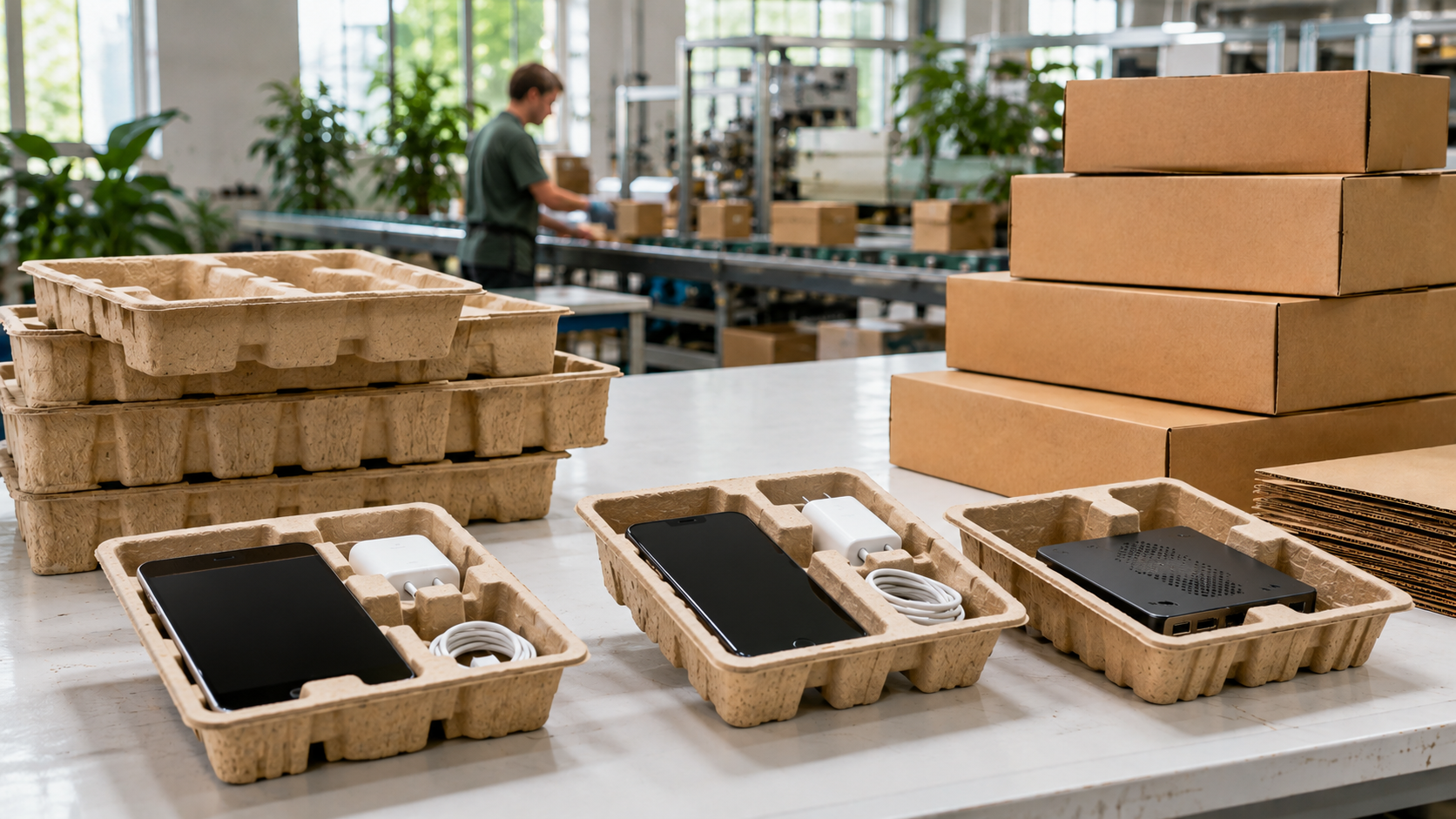
Electronic products require packaging that provides reliable protection while maintaining an efficient, professional, and increasingly sustainable packaging system. Molded pulp trays have become a practical alternative to conventional plastic s for smartphones, tablets, accessories, electronic components, and various industrial devices.
However, not all molded pulp packaging offers the same level of quality. Choosing the right tray requires careful consideration of material, structural design, product fit, strength, surface quality, and manufacturing capability.
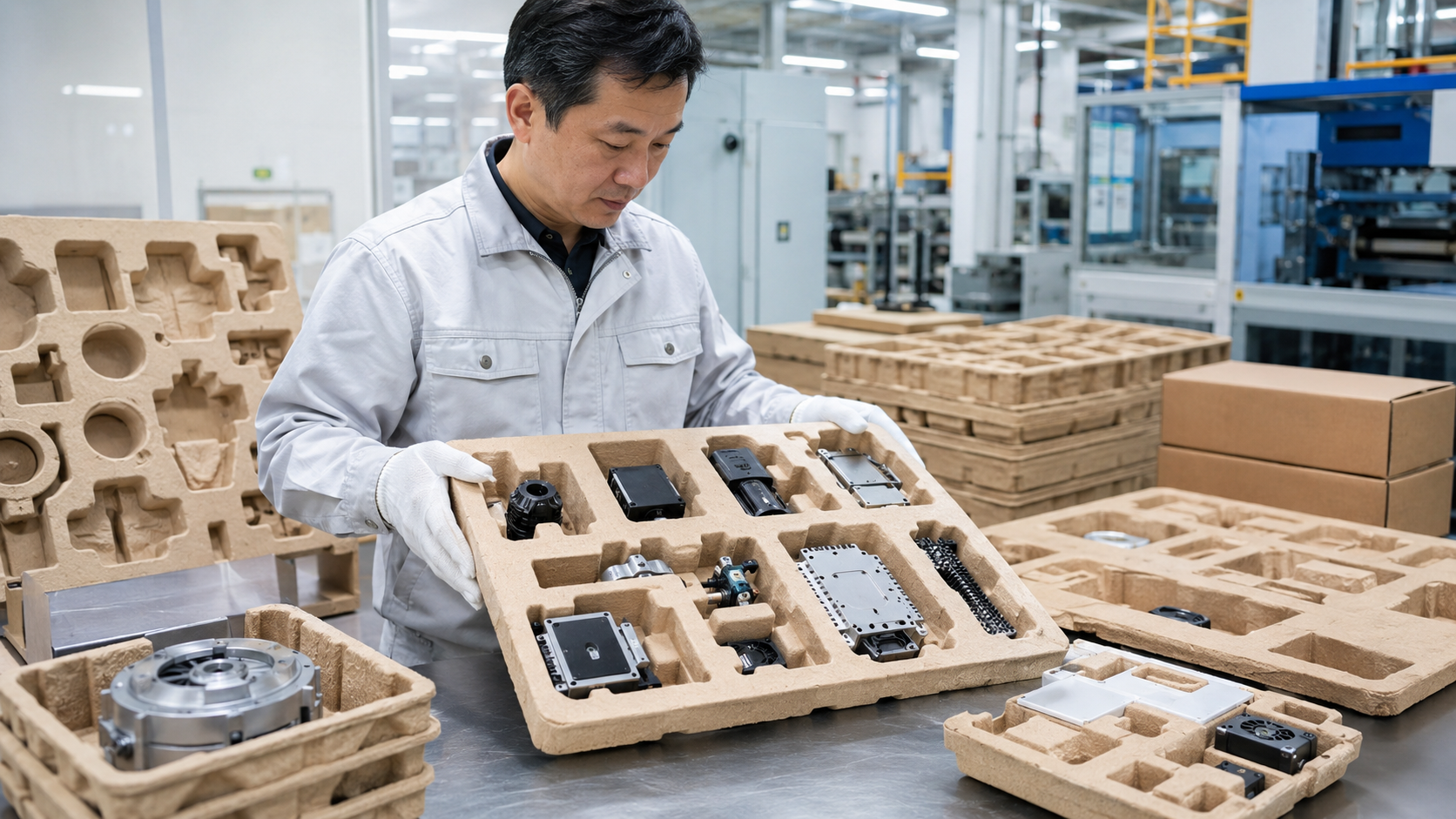
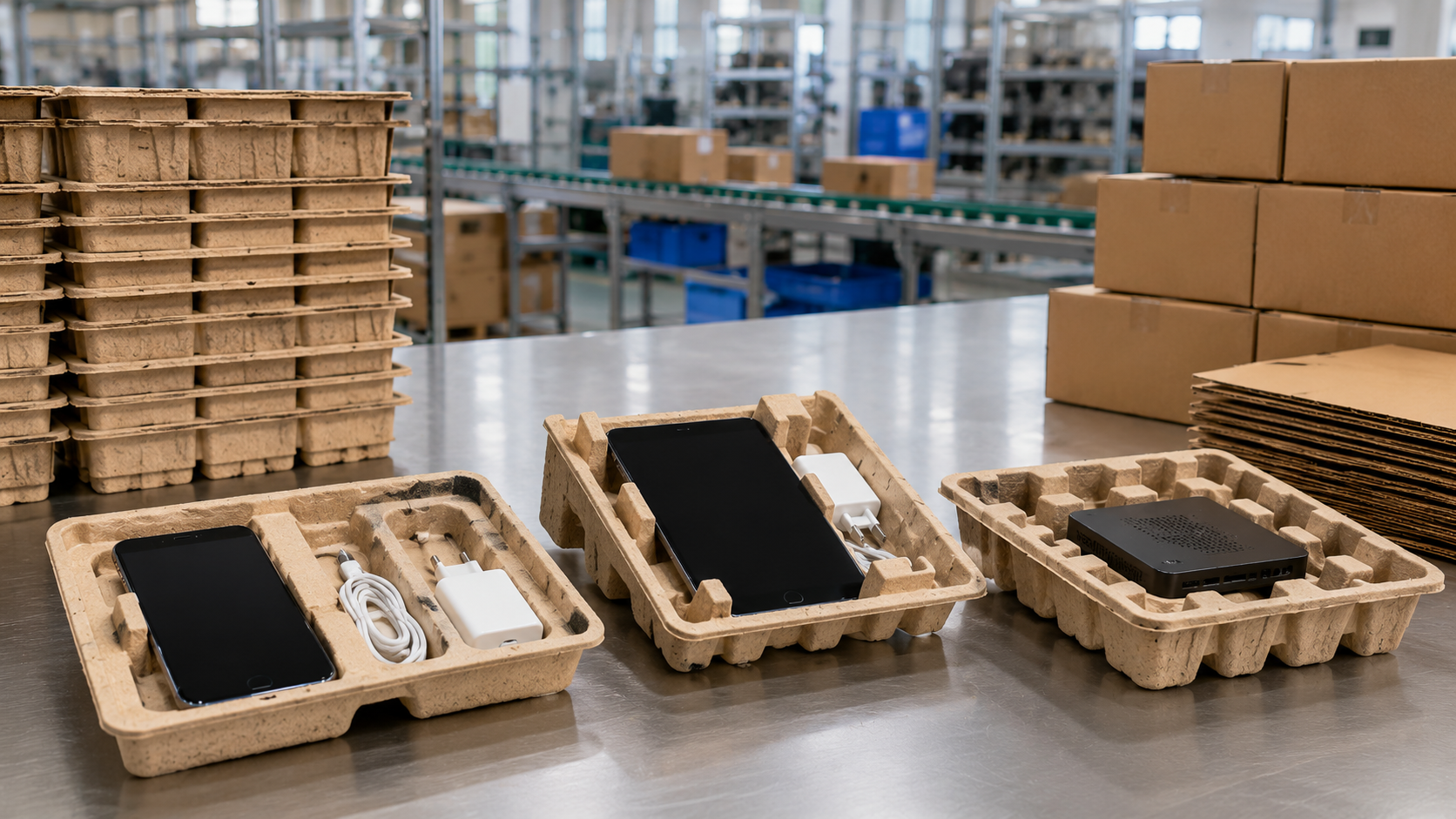
A molded pulp tray for electronics is a protective packaging manufactured from molded fiber materials. The tray is designed according to the dimensions and structure of a specific electronic product, allowing the device and its accessories to remain securely positioned during storage, handling, and transportation.
These trays can be customized for many products, including:
Smartphones and tablets
Chargers and power adapters
Earphones and electronic accessories
Routers and network devices
Small household electronics
Electronic components
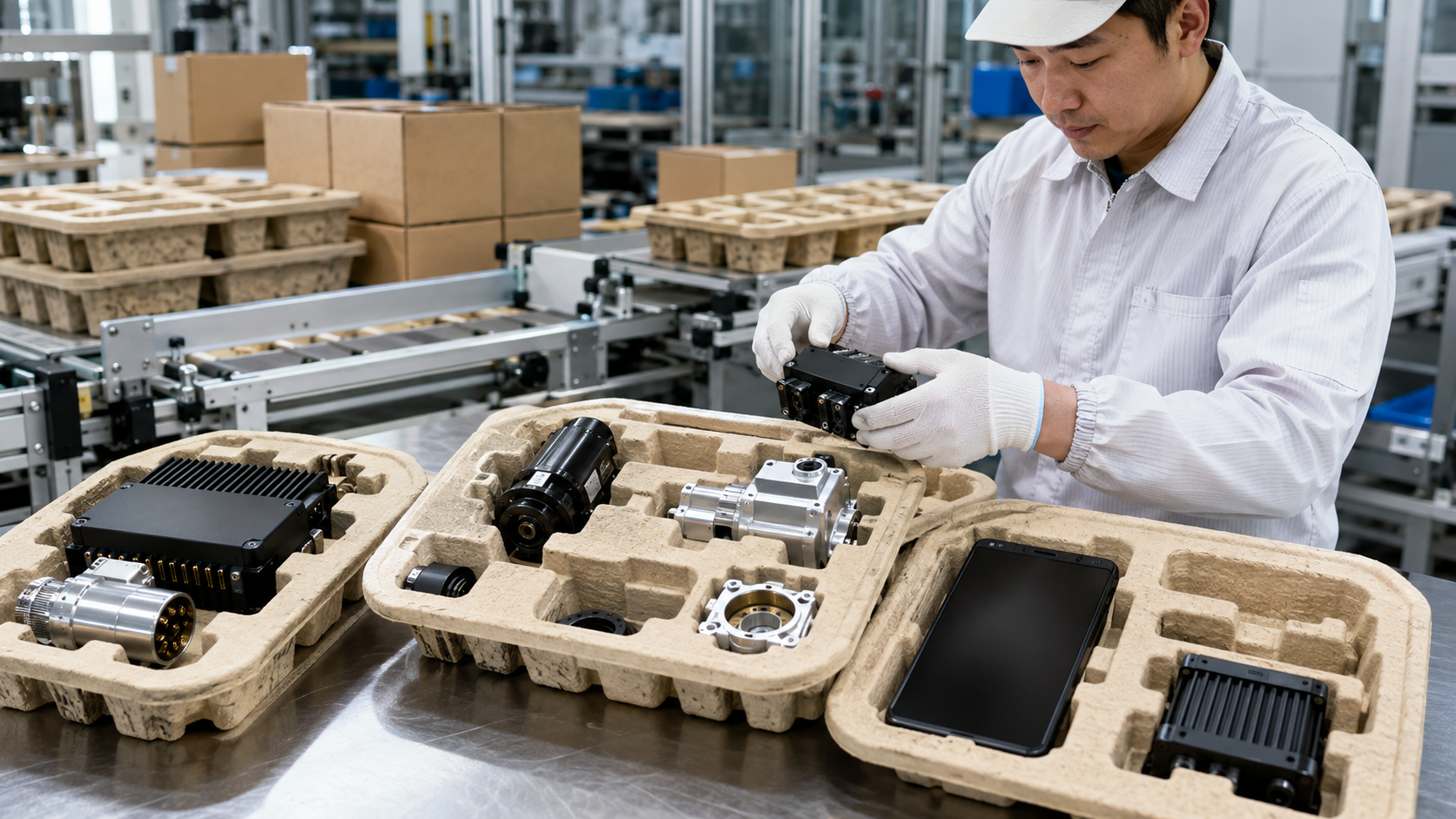
Industrial electronic equipment
Compared with conventional plastic s, molded pulp packaging can provide a more environmentally responsible solution while still meeting practical packaging requirements.
Material quality is one of the first factors to evaluate when choosing molded pulp trays.
High-quality molded fiber should have a relatively consistent texture and sufficient rigidity to maintain its shape during packaging and transportation. Depending on the application, manufacturers may use recycled paper fibers, virgin pulp, or different fiber blends.
For electronic packaging, businesses should materials based on the weight, dimensions, fragility, and protection requirements of the product.
A suitable material should provide:
Good structural stability
Adequate compression resistance
Consistent thickness
Reliable product support
Clean and uniform appearance
Material ion should therefore be based on actual packaging requirements rather than price alone.
Electronic products may be exposed to vibration, stacking pressure, impact, and repeated handling throughout the logistics process. The molded pulp tray must therefore provide sufficient mechanical strength.
Check whether the tray maintains its shape when pressure is applied. Corners, walls, ribs, and supporting areas should be designed to distribute external forces effectively.
For heavier electronic equipment, additional reinforcement may be required around critical supporting areas.
A well-designed tray helps reduce direct contact between the product and the outer packaging while keeping the device securely positioned inside the box.
Product fit is particularly important when ing custom molded pulp packaging for electronics.
A tray that is too loose may allow the device to move during transportation. A tray that is too tight may create unnecessary pressure on sensitive components or make the product difficult to remove.
Manufacturers should consider:
Product dimensions
Device shape
Weight distribution
Sensitive areas
Accessory compartments
Clearance between components
Outer carton dimensions
For products packaged together with chargers, cables, adapters, manuals, or other accessories, separate compartments can improve organization and prevent components from contacting each other.
Surface quality affects both protection and product presentation.
For consumer electronics and premium products, smooth molded pulp surfaces can create a cleaner and more professional appearance. High-quality trays should have relatively uniform edges and surfaces without excessive loose fibers, deformation, cracks, or unwanted debris.
Advanced production methods such as hot pressing can further improve dimensional accuracy and surface smoothness.
This is particularly important for electronics brands that use molded pulp packaging as part of the customer's unboxing experience.
Protective performance should match the sensitivity of the electronic device.
The tray design can incorporate molded ribs, raised supporting points, cavities, reinforced corners, and cushioning structures. These features help distribute impact forces and limit movement inside the package.
For fragile or high-value electronics, businesses should consider testing the complete packaging system rather than evaluating the molded tray alone.
The tray, product, outer carton, and other packaging components should work together as one protective system.
Consistent dimensions are essential for automated or high-volume packaging operations.
Variation between trays can create problems during assembly, product ion, carton packing, or automated production processes. Businesses purchasing large quantities should therefore evaluate the manufacturer's mold accuracy and production consistency.
Before mass production, requesting prototypes or samples is recommended. Samples allow buyers to check product fit, appearance, structural performance, and compatibility with the final packaging configuration.
Different electronic products require different molded pulp structures.
Common designs include:
Single-piece trays: Suitable for products that require simple positioning and protection.
Top-and-bottom packaging: The electronic device is secured between two molded pulp components for additional protection.
Compartment trays: Designed with separate sections for the main device, charger, cable, adapter, and accessories.
Custom protective s: Developed according to the exact geometry and packaging requirements of a particular product.
The most suitable structure depends on product weight, fragility, packaging dimensions, logistics conditions, and presentation requirements.
Sustainability is one of the main reasons businesses are replacing conventional plastic packaging with molded fiber solutions.
When evaluating suppliers, buyers should examine the type of fiber used, recyclability, production process, and overall material efficiency.
A well-designed molded pulp tray can reduce unnecessary packaging material while providing adequate protection for electronic products.
However, environmental claims should be verified carefully. Businesses should request relevant material information, certifications, or testing documentation when these factors are important to their purchasing requirements.
Choosing a reliable molded pulp tray manufacturer is as important as choosing the tray itself.
For commercial and industrial orders, buyers should evaluate:
Mold development capability
Custom design experience
Production capacity
Quality control procedures
Sample development process
Lead time
Large-volume order capability
Experience with electronic packaging
A manufacturer with strong R&D and mold development capabilities can optimize the tray according to the actual product instead of relying on standard packaging structures.
Sample evaluation is an important step before placing a large order.
Place the actual electronic product and accessories into the prototype tray and check whether all components remain properly positioned. The sample should also be tested inside the intended outer carton.
Depending on the product and distribution environment, businesses may consider , vibration, compression, or transportation testing.
Any structural problems identified during this stage can be corrected before mass production, reducing the risk of packaging failures and unnecessary costs.
The lowest-priced molded pulp tray is not necessarily the most economical option.
Poor dimensional accuracy, weak structures, or inconsistent production can increase product damage, packaging errors, returns, and repacking costs.
Instead of comparing only the unit price, buyers should consider the total packaging performance, including protection, production efficiency, material usage, logistics compatibility, and consistency.
For high-volume electronic products, even small improvements in tray design can contribute to significant savings throughout the supply chain.
Choosing high-quality molded pulp trays for electronics requires more than simply ing an environmentally friendly material. Businesses should evaluate material quality, structural strength, dimensional accuracy, product fit, cushioning performance, surface finishing, customization capability, and manufacturer reliability.
Before mass production, prototypes should be tested with the actual electronic product, accessories, and outer packaging. A properly engineered molded pulp tray can protect electronic devices during transportation, improve packaging efficiency, enhance product presentation, and support the transition toward more sustainable packaging solutions.
For electronics manufacturers, brands, and packaging distributors, working with an experienced molded pulp packaging manufacturer can help develop customized trays that meet both technical and commercial requirements.
CATEGORIES
Featured Products & Services
*YOU MAY ALSO LIKE
For consultation on pulp trays, pulp shoe s, and custom molded pulp products, please contact Shenghe Viet Nam using the information below.
Address: Land Lot No. 716, Map Sheet No. 107, Dat Cuoc 12 Street, Bac Tan Uyen Commune, Ho Chi Minh City, Vietnam
Telephone: +84 338 686 128
Hotline: +84 374 109 382
Email: shenghevietnam@163.com
Shenghe Viet Nam is an enterprise focused on R&D, manufacturing, and sales of eco-friendly molded pulp products. We specialize in producing eco-friendlypulp handicrafts, pulp toys, daily pulp necessities, and industrial pulp packaging.
Shenghe Viet Nam Development Company Limited
Address: Land Lot No. 716, Map Sheet No. 107, Dat Cuoc 12 Street, Bac Tan Uyen Commune, Ho Chi Minh City, Vietnam
Telephone: +84 338 686 128
Hotline: +84 374 109 382
Email: shenghevietnam@163.com
Shenghe Viet Nam Development Company Limited
Địa chỉ: Land Lot No. 716, Map Sheet No. 107, Dat Cuoc 12 Street, Bac Tan Uyen Commune, Ho Chi Minh City, Vietnam
Business Registration Certificate No. 3703249941 – Issued by the Department of Planning and Investment of Ho Chi Minh City on October 1st, 2024
Responsible for content - Ban Thi Huong
@ Copyright by Shenghe Viet Nam Development Company Limited. Designed by Vietnam Yellow Pages.