shenghevietnam@163.com / +84338686128, +84374109382
Land Lot No. 716, Map Sheet No. 107, Dat Cuoc 12 Street, HCM City, Vietnam
Businesses are increasingly looking for packaging that protects products while reducing unnecessary material use. Molded pulp trays provide a practical option for footwear, electronics, food packaging, consumer goods, and industrial components. They can be shaped to fit individual products, helping improve protection, organization, and presentation throughout transportation and storage.
Made from molded fiber materials, these trays can replace certain conventional packaging s in suitable applications. Their environmental performance depends on the raw materials, additives, coatings, product design, and available local recycling facilities. Therefore, businesses should evaluate both sustainability and technical performance when choosing molded pulp packaging.
Molded pulp trays are formed by molding fiber-based pulp into a specific shape. Depending on the application, a tray may include compartments, raised edges, supporting ribs, cushioning sections, or product-fitting cavities.
Manufacturers can develop molded pulp packaging for different dimensions and product structures. Common applications include:
The shape, thickness, surface finish, and structural design can be adjusted according to the product and packaging requirements.
Molded pulp packaging is made from fiber-based pulp rather than being produced entirely from conventional plastic materials. This gives businesses another material option when developing packaging for specific products.
The actual environmental impact depends on the source of the fiber, manufacturing process, product weight, energy use, transportation distance, and end-of-life treatment. Buyers should request detailed material information before making environmental claims about a packaging product.
A properly designed molded pulp tray can hold, separate, and support products within a single structure. It may reduce the need for several individual s, fillers, or supporting components.
Using fewer packaging parts can simplify packing operations and make it easier for customers to separate materials after use. However, the packaging design should still provide sufficient protection during storage, handling, and transportation.
Custom molded pulp trays can be developed to match the shape and dimensions of a product. A close-fitting design helps keep the item in position and reduces movement inside the outer package.
Customization can also prevent the use of oversized s. By matching the product more closely, businesses may optimize packaging space and create a more organized presentation.
Many molded pulp products are designed with fiber-based recovery in mind. Their recyclability, however, depends on the exact material composition, coatings, adhesives, contamination, and capabilities of local recycling systems.
Businesses should verify whether a tray is accepted by the recycling facilities available in its target market. Clear disposal instructions can also help end users handle the packaging appropriately.
Sustainable packaging does not simply mean replacing one material with another. It also involves using an appropriate amount of material for the required level of product protection.
Molded pulp trays can incorporate cavities, ribs, walls, and supporting points only where they are needed. This allows manufacturers to develop a structure based on the product's weight, shape, and vulnerable areas.
Molded pulp trays can help secure products and limit movement inside the package. Their formed structure can provide separation and support for individual items or components.
The required protection level varies by application. Electronics, footwear, food products, and industrial parts may need different tray thicknesses, shapes, surface finishes, and cushioning structures.
Custom molded pulp packaging can be developed for a wide range of product dimensions. Manufacturers can create dedicated cavities, compartments, edges, and support points based on the product design.
Customization is particularly useful when standard packaging s do not fit the product or when a business wants to improve packing efficiency.
A fitted tray keeps products arranged inside the outer package. This creates a cleaner presentation when customers open the box and makes it easier to identify separate components.
For retail products and branded packaging, the tray's color, shape, and surface quality can also influence the overall appearance of the package.
A tray designed for the correct product can reduce the time required to arrange and secure items. Workers can place products directly into defined compartments rather than positioning several separate fillers.
For high-volume orders, small improvements in the packing process can support more consistent operations and reduce handling complexity.
Custom trays can be designed around the available space inside the outer carton. They may also be stackable or nestable, depending on their structure.
Businesses should consider the space occupied by empty trays, packed products, and shipping cartons when evaluating overall logistics efficiency.
Pulp shoe s and pulp shoe trees help support footwear during packaging, storage, and transportation. They can be developed for different shoe styles, sizes, and internal structures.
Existing mold options may reduce tooling requirements when a suitable design is already available. For unique footwear products, a new mold may be needed to achieve the required fit.
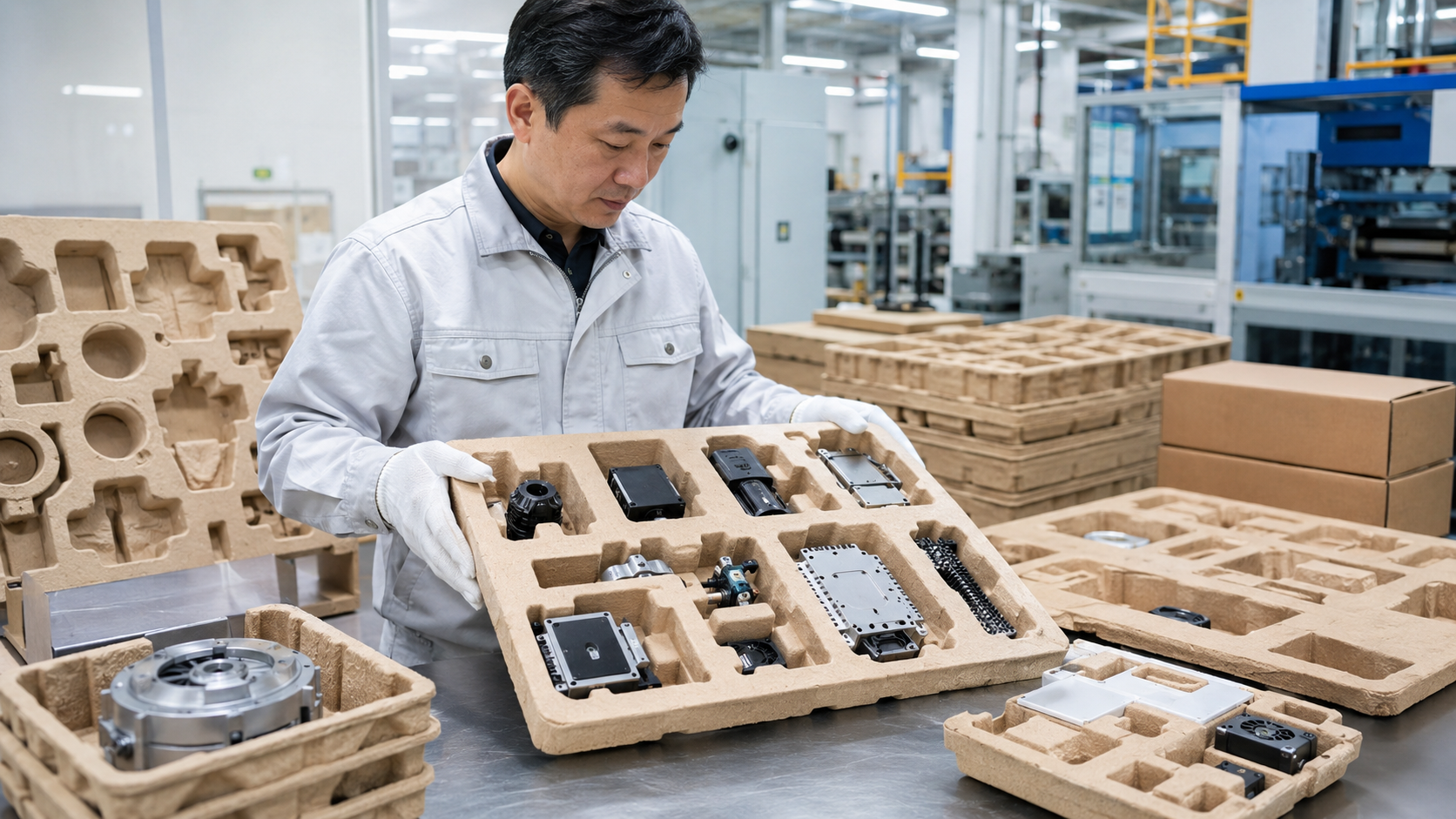
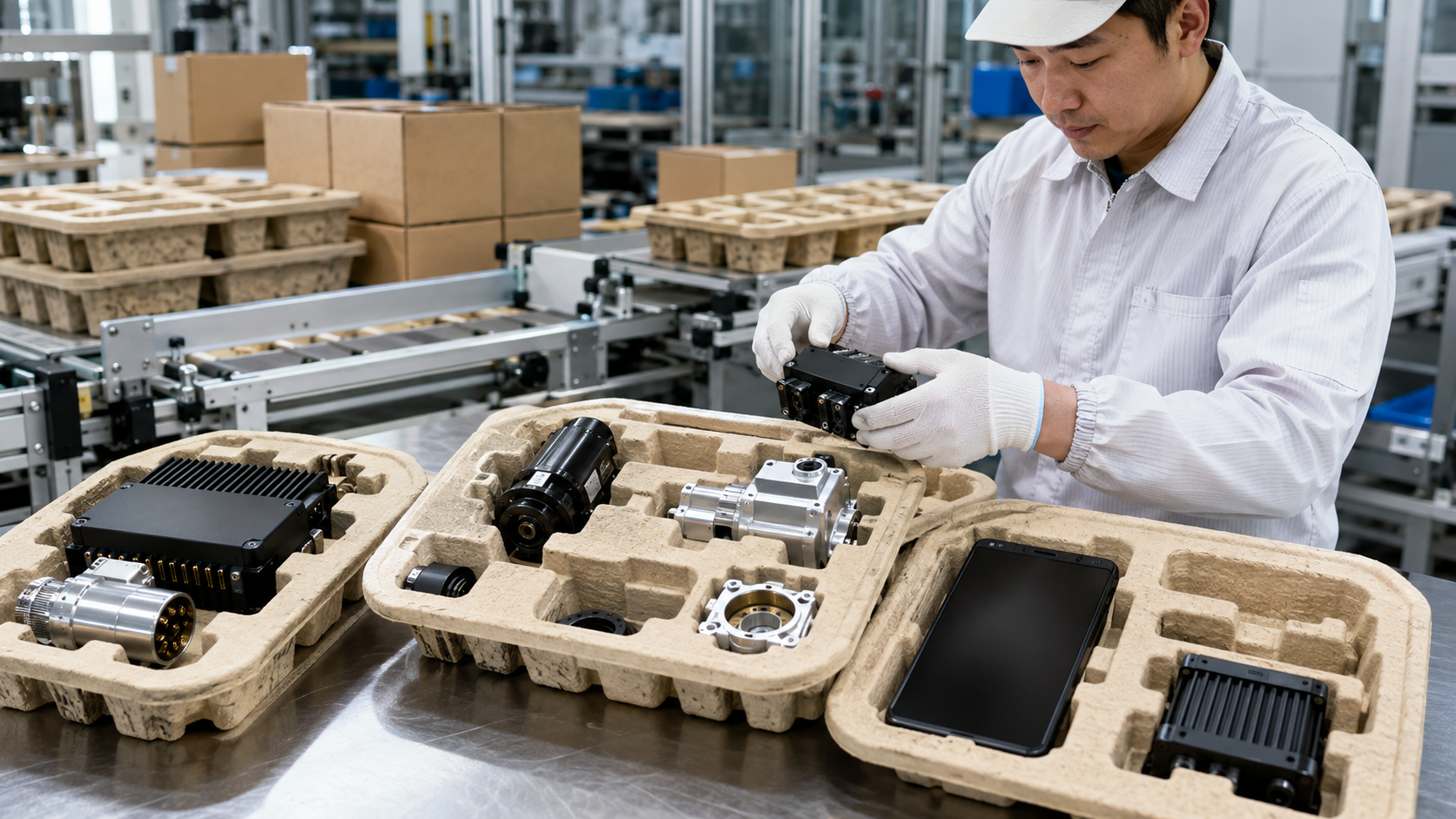
Electronic component trays can separate and organize parts inside the package. A custom design helps reduce contact and movement between individual components.
Buyers should provide detailed information about product dimensions, weight, sensitivity, and transportation conditions. Additional technical requirements may apply depending on the electronic component.
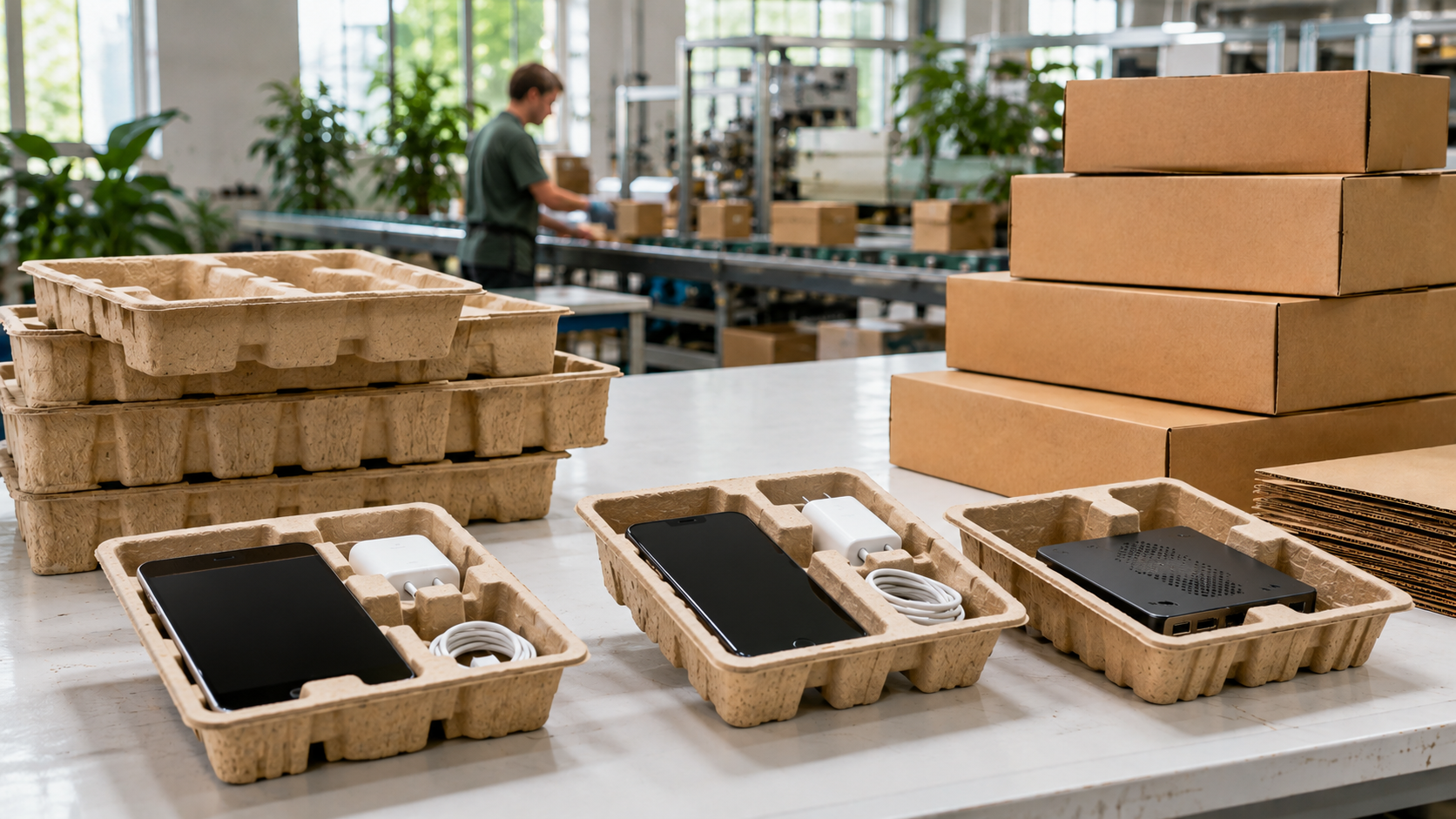
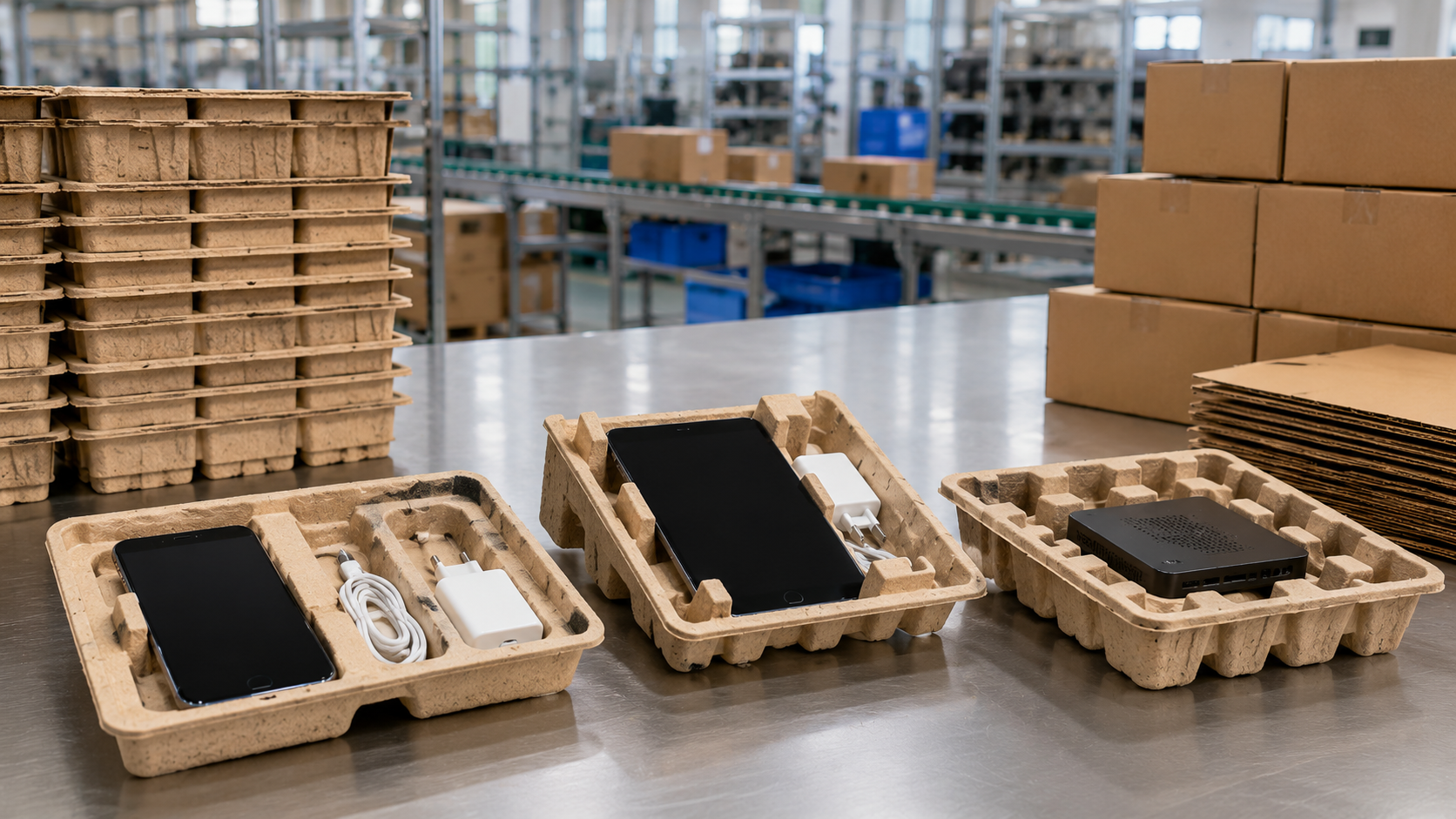
Molded pulp trays can be used as s for mobile phones and related products. Defined compartments may be created for the main device and its accessories.
The tray design must match the outer box and product layout. Surface quality is also important when the packaging is visible to the final customer.
Food pulp trays can be formed for different types of food products. Businesses must clearly communicate the intended application to the manufacturer because food-related packaging may require specific material and performance considerations.
Suitability should be confirmed according to the product, storage conditions, packaging process, and applicable customer requirements.
Industrial pulp trays can hold components, small parts, tools, and manufactured products. They may be designed for internal transportation, warehouse organization, or final product packaging.
The tray structure should account for product weight, handling frequency, stacking conditions, and transportation risks.
Pulp egg trays use individual cavities to separate and support eggs. The molded structure helps organize the products and reduce direct contact between them.
Tray size, cavity dimensions, stacking performance, and outer packaging should be considered during ion.
Molded pulp and plastic s have different properties, so the best choice depends on the intended application.
| Comparison factor | Molded pulp trays | Plastic s |
|---|---|---|
| Primary material | Fiber-based pulp | Plastic-based material |
| Custom shaping | Available | Available |
| Surface appearance | Natural or processed fiber finish | Often smooth and uniform |
| Moisture performance | Depends on formulation and treatment | Varies by plastic type |
| Recycling options | Depend on composition and local systems | Depend on resin type and local systems |
| Product visibility | Usually opaque | Can be transparent |
| Typical applications | Footwear, food, electronics and industrial packaging | Retail, food, electronics and industrial packaging |
Neither material is automatically suitable for every product. Businesses should compare protection, cost, moisture resistance, appearance, transportation, material sourcing, and end-of-life conditions.
The manufacturer needs accurate information about the product's length, width, height, and weight. These details determine the cavity size and supporting structure of the tray.
Businesses should identify the risks the packaging must address, such as movement, impact, stacking pressure, surface contact, or separation between components.
Temperature, humidity, storage time, and transportation conditions may affect packaging performance. These conditions should be discussed before finalizing the material and structure.
Some applications require a smoother and cleaner surface, particularly when the tray is part of the customer-facing packaging. Others prioritize strength and internal protection over appearance.
Using an existing mold may help reduce mold-development costs and shorten preparation time. A custom mold provides a more product-specific fit but requires additional development.
Production volume affects material preparation, mold planning, manufacturing, drying, finishing, and delivery. Buyers should confirm the required quantity and target schedule at the beginning of the project.
A typical custom packaging project may include the following stages:
Providing accurate product information from the beginning helps reduce unnecessary revisions and supports a more efficient sampling process.
Shenghe Viet Nam Development Company Limited specializes in the research, manufacturing, and sale of molded pulp products. Its product range includes pulp shoe s, custom molded pulp trays, food packaging trays, electronic component trays, mobile phone trays, egg trays, and industrial pulp packaging.
The company has more than 20 years of experience in the molded pulp industry and operates five factories in Vietnam, Dongguan, and Jiangxi Province. Its production resources include over 3,200 meters of fully automated drying lines and more than 2,000 existing molds for footwear and packaging trays.
Shenghe also has a team of 20 mold-development specialists and technical engineers. Its patented flash-free hot-pressing technology is designed to create smooth surfaces on both sides while reducing debris and manual processing. Urgent orders can be shipped within 24 hours, subject to product specifications, quantity, and order confirmation.
The company holds ISO 9001:2008 and ISO 9001:2015 certifications and serves customers in Vietnam and FDI enterprises operating in Vietnam.
Molded pulp trays can improve sustainable product packaging by providing a fiber-based, customizable, and material-efficient packaging option. They can protect products, organize components, simplify packing, and reduce the need for multiple separate s.
Environmental performance must still be evaluated across the entire packaging system, including raw materials, production, transportation, coatings, recycling access, and actual end-of-life treatment. Businesses should work with an experienced manufacturer to develop trays that balance sustainability objectives with product protection and operational requirements.
For consultation on pulp trays, pulp shoe s, and custom molded pulp packaging, please contact Shenghe Viet Nam Development Company Limited via Zalo/ Hotline at +84338686128, +84374109382
CATEGORIES
Featured Products & Services
*YOU MAY ALSO LIKE
For consultation on pulp trays, pulp shoe s, and custom molded pulp products, please contact Shenghe Viet Nam using the information below.
Address: Land Lot No. 716, Map Sheet No. 107, Dat Cuoc 12 Street, Bac Tan Uyen Commune, Ho Chi Minh City, Vietnam
Telephone: +84 338 686 128
Hotline: +84 374 109 382
Email: shenghevietnam@163.com
Shenghe Viet Nam is an enterprise focused on R&D, manufacturing, and sales of eco-friendly molded pulp products. We specialize in producing eco-friendlypulp handicrafts, pulp toys, daily pulp necessities, and industrial pulp packaging.
Shenghe Viet Nam Development Company Limited
Address: Land Lot No. 716, Map Sheet No. 107, Dat Cuoc 12 Street, Bac Tan Uyen Commune, Ho Chi Minh City, Vietnam
Telephone: +84 338 686 128
Hotline: +84 374 109 382
Email: shenghevietnam@163.com
Shenghe Viet Nam Development Company Limited
Địa chỉ: Land Lot No. 716, Map Sheet No. 107, Dat Cuoc 12 Street, Bac Tan Uyen Commune, Ho Chi Minh City, Vietnam
Business Registration Certificate No. 3703249941 – Issued by the Department of Planning and Investment of Ho Chi Minh City on October 1st, 2024
Responsible for content - Ban Thi Huong
@ Copyright by Shenghe Viet Nam Development Company Limited. Designed by Vietnam Yellow Pages.