shenghevietnam@163.com / +84338686128, +84374109382
Land Lot No. 716, Map Sheet No. 107, Dat Cuoc 12 Street, HCM City, Vietnam
Product packaging must do more than hold an item. It needs to protect the product, organize individual components, support efficient packing, and create a suitable presentation for the final customer. Custom molded pulp packaging trays can meet these requirements by being designed around the dimensions and structure of a specific product.
These fiber-based trays are used for footwear, electronics, mobile phones, food products, eggs, industrial components, handicrafts, toys, and daily-use products. Their shape, thickness, cavities, supporting ribs, and surface finish can be adjusted according to each packaging application.
Custom molded pulp packaging trays are fiber-based s formed with molds designed for specific products. Unlike standard trays with fixed dimensions, custom trays can include dedicated cavities, raised walls, supporting points, and separate compartments.
A manufacturer develops the tray according to the product's :
The result is a packaging that fits the product more closely and limits unnecessary movement inside the box.
One of the main benefits of custom molded pulp packaging trays is their ability to match the shape of a product. Each cavity can be designed around the dimensions and structure of the item it needs to hold.
A close fit helps keep the product in the correct position during packing, storage, and transportation. It can also reduce the need to add separate fillers to empty spaces inside the outer carton.
Businesses should provide accurate drawings, measurements, samples, or 3D product data to support the mold-development process.
Movement inside a package can lead to contact, scratches, displacement, or damage. A custom molded pulp tray can include structural features that hold the product and separate it from other components.
Depending on the application, the tray may incorporate:
The required design depends on the product's weight, shape, sensitivity, and transportation environment. Testing the packaging with a physical sample is recommended before mass production.
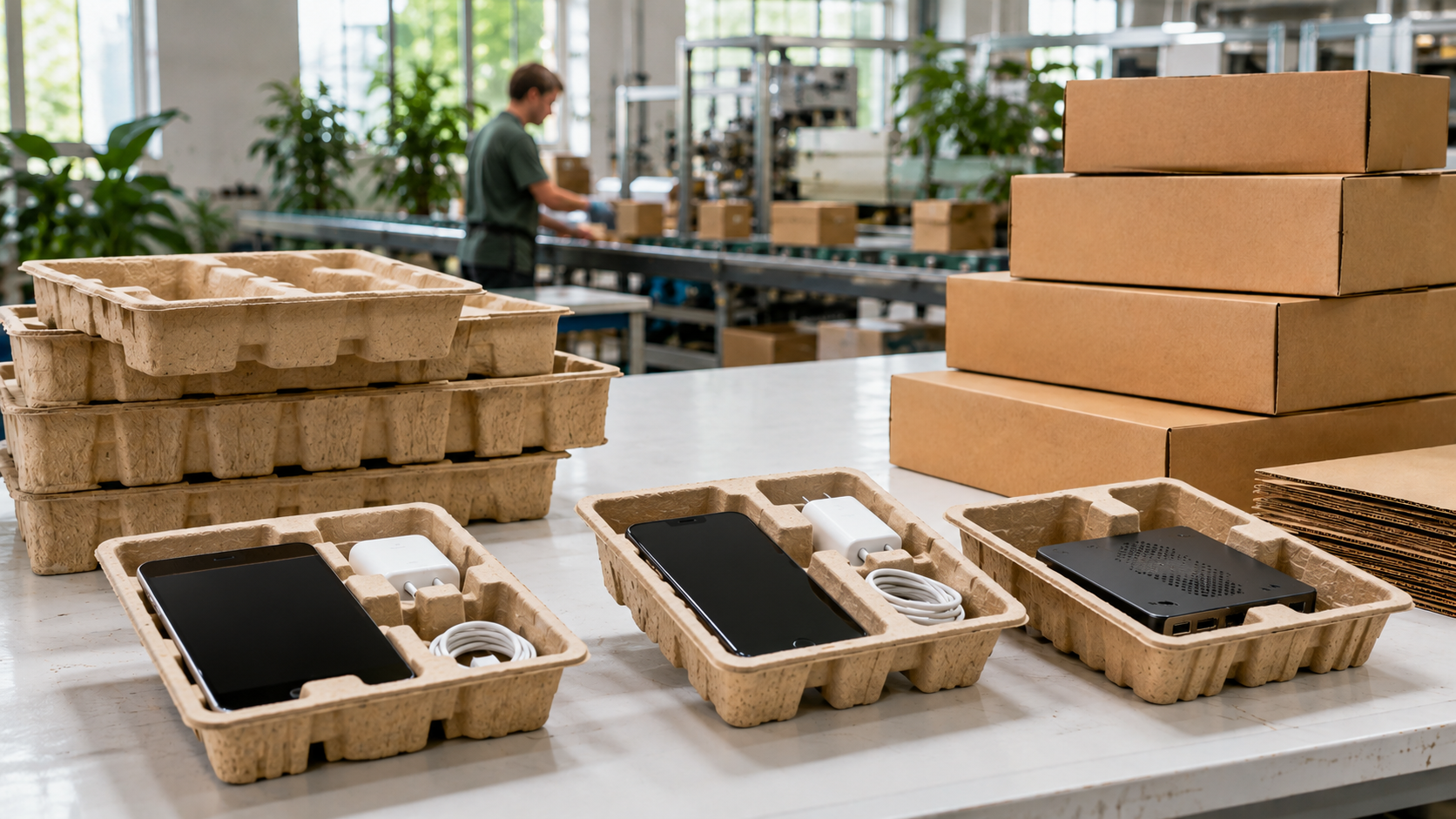
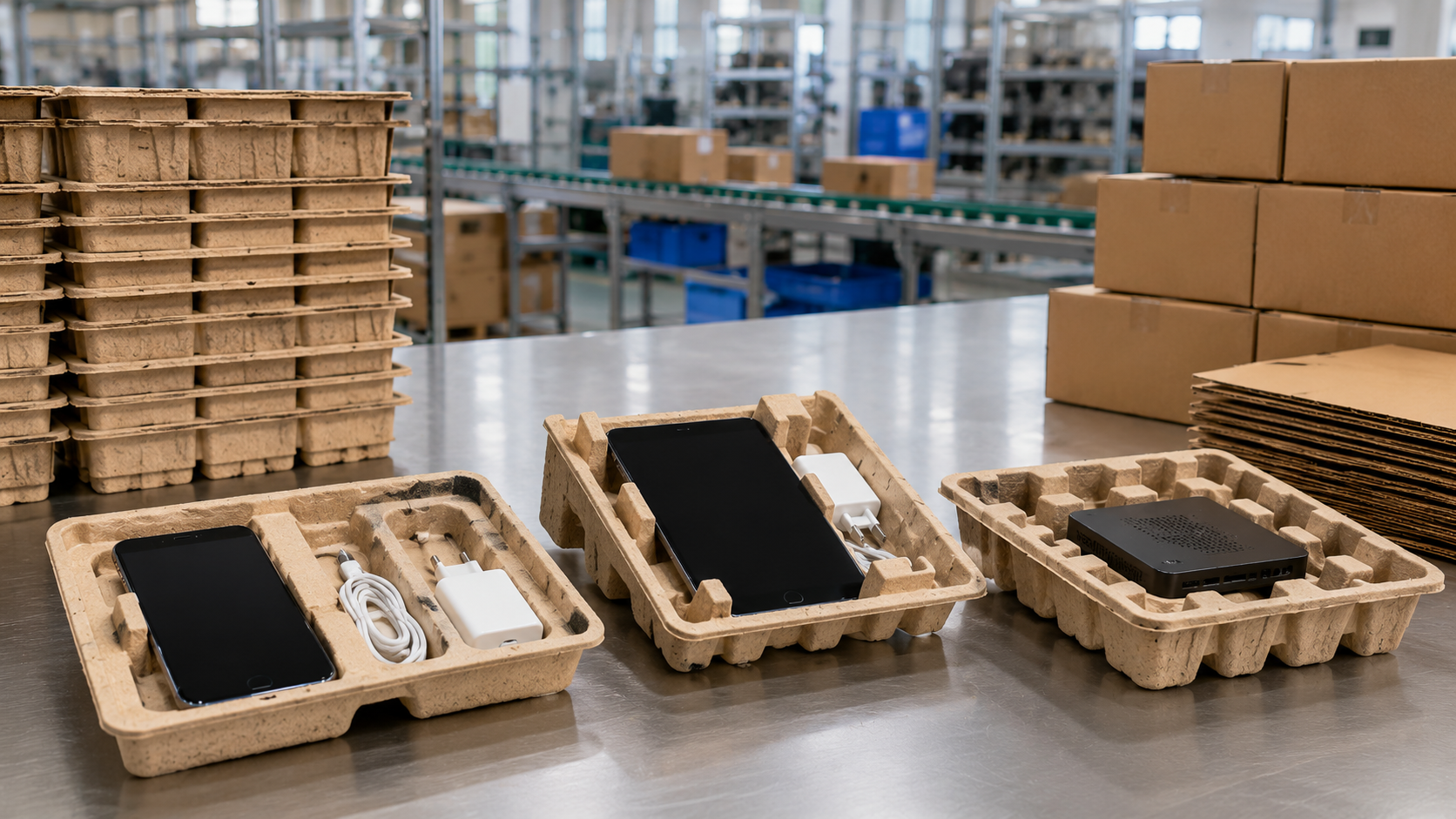
Products such as mobile phones, electronic devices, industrial parts, and consumer goods may include multiple components in one package. A custom tray can provide a dedicated position for each part.
This arrangement offers several practical benefits:
The tray can be divided into different cavities while remaining one complete packaging component.
Standard packaging may leave excessive space around a product. Custom molded pulp trays can be designed to use the available area inside the outer carton more efficiently.
A product-specific design may help businesses:
Space efficiency should be assessed across the entire packaging system, including the tray, outer carton, pallet configuration, and transportation method.
Packaging that uses several loose fillers or supporting components can take more time to assemble. A custom molded pulp provides defined positions where workers can place each product or accessory.
This can make the packing process more consistent, especially for repeat or high-volume orders. A clear tray layout may also reduce confusion when similar components must be packaged together.
Businesses should test the tray with their actual packing process to confirm that workers can place and remove products conveniently.
The appearance of the packaging can influence how customers view a product. Custom trays keep items in an organized position and create a cleaner layout when the package is opened.
Manufacturers may adjust the tray's shape, color, and surface finish according to the intended presentation. A smoother surface can be suitable for customer-facing packaging, while a standard fiber surface may be sufficient for internal or industrial applications.
The appropriate finish depends on the product category, target market, and packaging budget.
Custom molded pulp packaging trays can be developed for many products and industries. Common applications include:
Each application requires a different structural design. A tray for footwear, for example, will not have the same shape or performance requirements as a tray for electronics or industrial components.
Molded pulp provides businesses with a fiber-based alternative for suitable packaging applications. It can support packaging strategies that aim to reduce unnecessary components and use materials more efficiently.
However, environmental performance should not be judged by material type alone. Buyers should also consider:
Recyclability can vary according to the material composition, coatings, contamination, and recycling systems available in the target market.
Empty molded pulp trays may be designed to nest together, helping reduce the space required for storage and transportation before use. Packed trays can also incorporate structures that support stable stacking.
This benefit is particularly relevant for factories and packing facilities handling large order volumes. Efficient nesting can simplify internal storage, while stable stacking supports warehouse and transportation planning.
Tray dimensions and stacking performance should be confirmed during sampling and testing.
Custom tray production begins with ing or developing a suitable mold. If an existing mold closely matches the required product, businesses may be able to reduce the cost and preparation time associated with new tooling.
A new mold may be necessary when:
Working with a manufacturer that has a large mold library can provide more options during the initial design stage.
Pulp shoe s and shoe trees are designed to support the shape of footwear during packaging and transportation. Different shoes may require different structures depending on their size, style, and internal space.
A custom can be developed for:
When an existing mold fits the footwear, customers may avoid developing an entirely new mold. Otherwise, the manufacturer can prepare a custom design based on the shoe sample or technical information.
Electronic products and components often need organized packaging with separate cavities. A molded pulp tray can hold a mobile phone, device, accessory, or industrial electronic component in a defined position.
Important information for tray development includes:
Additional material or technical requirements may apply depending on the electronic product. Buyers should communicate these requirements clearly before mold development.
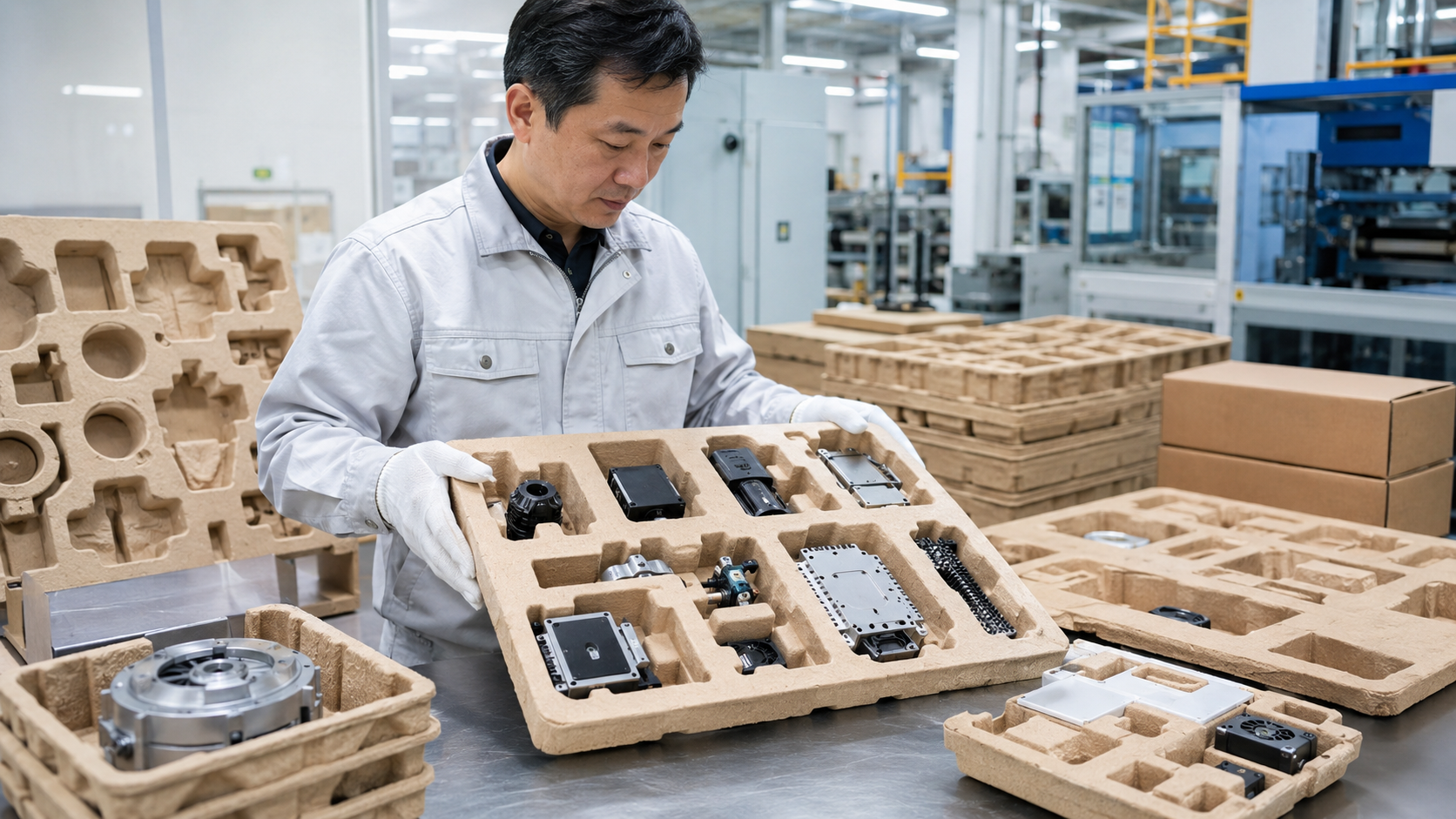
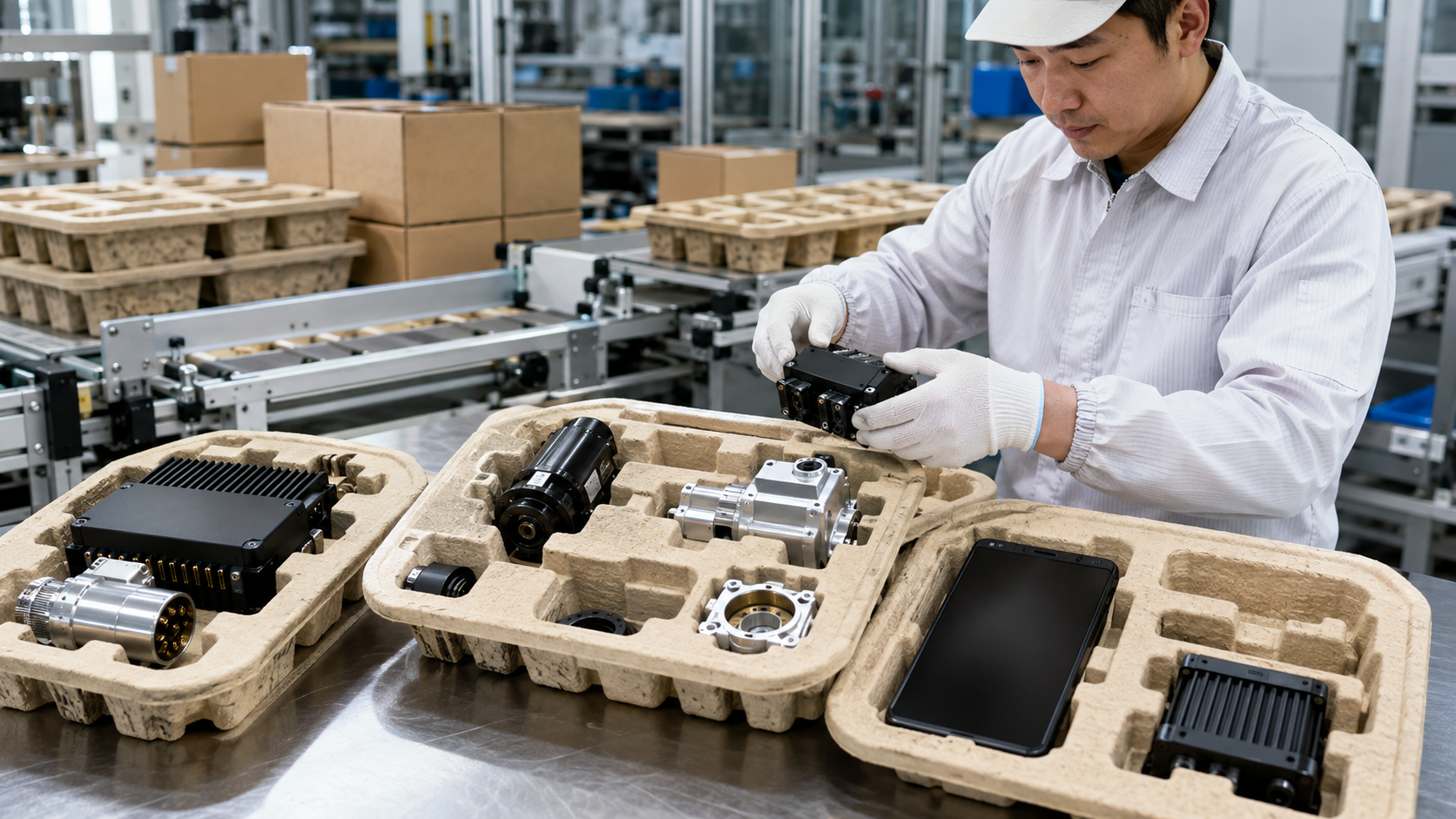
Industrial molded pulp trays can be used to package manufactured parts, tools, mechanical components, and other products. The tray may support internal factory transportation, warehouse organization, or final delivery to customers.
A custom structure can help separate components and reduce direct contact between individual parts. For heavier items, the manufacturer must evaluate tray thickness, support points, and stacking conditions carefully.
Sampling and performance testing are particularly important for industrial products with unusual shapes or concentrated weight.
Molded pulp trays can also be produced for certain food packaging applications. The tray shape may be customized according to the food product, portion arrangement, outer package, and handling method.
Businesses should provide complete information about:
Material suitability and other application-specific requirements should be confirmed with the manufacturer before ordering.
Businesses generally have two mold options when purchasing molded pulp packaging trays.
An existing mold may be suitable when its dimensions and cavity structure closely match the product. This option can help shorten preparation time and reduce tooling costs.
However, buyers should still request a sample to confirm fit and performance.
A new mold allows the tray to be designed specifically for the product and outer packaging. It is suitable when accurate positioning, a distinctive structure, or a unique component layout is required.
New mold development involves additional preparation, sampling, evaluation, and possible design adjustments before mass production.
A typical development process includes the following steps:
The customer provides dimensions, weight, product samples, drawings, packaging requirements, and order quantity.
The manufacturer evaluates the required protection, product position, outer carton, number of components, and intended application.
An existing mold is considered first when appropriate. If it does not meet the requirements, a new mold is developed.
A sample is manufactured so the customer can evaluate product fit, tray structure, surface quality, and ease of packing.
The cavity size, supporting points, tray thickness, edges, or overall dimensions may be modified according to the sample evaluation.
Mass production begins after the customer approves the design and confirms the order details.
The trays are produced, dried, finished, inspected, packed, and shipped according to the agreed schedule.
Businesses should evaluate a supplier according to practical production and development criteria:
Price is important, but it should be assessed together with tooling costs, product protection, packaging efficiency, quality consistency, and delivery reliability.
Shenghe Viet Nam Development Company Limited focuses on the research, manufacturing, and sale of eco-friendly molded pulp products. Its product portfolio includes custom molded pulp trays, pulp shoe s, food packaging trays, electronic component trays, mobile phone trays, egg trays, and industrial packaging trays.
The company has more than 20 years of experience in the molded pulp industry. Its production system includes over 3,200 meters of fully automated drying lines.
Shenghe provides access to more than 2,000 existing molds for footwear and packaging trays. The company also has a team of 20 mold-development specialists and technical engineers to support custom projects and sample preparation.
Its patented flash-free hot-pressing technology is designed to create smooth surfaces on both sides while reducing debris and manual processing. Urgent orders can be shipped within 24 hours, depending on product specifications, quantity, and order confirmation.
Shenghe Viet Nam holds ISO 9001:2008 and ISO 9001:2015 certifications and supplies customers in Vietnam and FDI enterprises operating in Vietnam.
Custom molded pulp packaging trays provide several benefits, including product-specific fit, improved protection, organized component placement, efficient packing, optimized use of space, and consistent presentation. Their customizable structure makes them suitable for footwear, electronics, food packaging, industrial parts, and various consumer products.
The final tray design should be based on accurate product information, packaging conditions, protection requirements, and order volume. Working with an experienced manufacturer can help businesses an existing mold or develop a new packaging tray that meets their operational needs.
For consultation on custom molded pulp trays, pulp shoes, and industrial pulp packaging, please contact Shenghe Viet Nam Development Company Limited via Zalo/ Hotline at +84338686128, +84374109382
CATEGORIES
Featured Products & Services
*YOU MAY ALSO LIKE
For consultation on pulp trays, pulp shoe s, and custom molded pulp products, please contact Shenghe Viet Nam using the information below.
Address: Land Lot No. 716, Map Sheet No. 107, Dat Cuoc 12 Street, Bac Tan Uyen Commune, Ho Chi Minh City, Vietnam
Telephone: +84 338 686 128
Hotline: +84 374 109 382
Email: shenghevietnam@163.com
Shenghe Viet Nam is an enterprise focused on R&D, manufacturing, and sales of eco-friendly molded pulp products. We specialize in producing eco-friendlypulp handicrafts, pulp toys, daily pulp necessities, and industrial pulp packaging.
Shenghe Viet Nam Development Company Limited
Address: Land Lot No. 716, Map Sheet No. 107, Dat Cuoc 12 Street, Bac Tan Uyen Commune, Ho Chi Minh City, Vietnam
Telephone: +84 338 686 128
Hotline: +84 374 109 382
Email: shenghevietnam@163.com
Shenghe Viet Nam Development Company Limited
Địa chỉ: Land Lot No. 716, Map Sheet No. 107, Dat Cuoc 12 Street, Bac Tan Uyen Commune, Ho Chi Minh City, Vietnam
Business Registration Certificate No. 3703249941 – Issued by the Department of Planning and Investment of Ho Chi Minh City on October 1st, 2024
Responsible for content - Ban Thi Huong
@ Copyright by Shenghe Viet Nam Development Company Limited. Designed by Vietnam Yellow Pages.